Wrong Pricing — The Biggest Reason Online Businesses Fail
Many sellers work hard, create lots of content, see orders increasing — but at the end of the month there's no real profit.
The reason is usually: wrong pricing.
Pricing isn't just taking the product cost and adding a markup. There are many hidden costs that get forgotten, and there are strategies that increase profit without losing customers.
First Step: Calculate Your True Cost
Many sellers only account for the product cost and forget the rest.
The Complete Cost Breakdown
Direct costs: - Product purchase or manufacturing cost - Raw material costs (if you make it yourself) - Packaging cost (bag, box, tissue, tape)
Delivery costs: - Shipping company fees (if you cover delivery) - Cost of sending samples and test orders
Operating costs (everyone forgets these): - Platform or store fees (sellX plan) - Photography costs (if you hire a photographer) - Your time (every hour has a value)
Returns and issues: - Assume 3–5% of orders will be returned or have a problem - This must be in your calculation
Worked Example
Product: Natural cream
| Cost Item | Amount |
|---|---|
| Cream ingredients | 35 EGP |
| Jar and packaging | 15 EGP |
| Label and logo | 5 EGP |
| Shipping share | 10 EGP |
| Returns share (5%) | 3 EGP |
| My time (30 min × 20 EGP/hr) | 10 EGP |
| Total cost | 78 EGP |
If you price the cream at 100 EGP, your profit isn't 65 — it's 22 EGP. That's not sustainable.
The right price: 150–200 EGP (profit 72–122 EGP = 48–61%)
The Simple Pricing Formula
`` Selling Price = Total Cost ÷ (1 - Desired Profit Margin) ``
Example: - Total cost: 78 EGP - Desired profit margin: 50%
Selling price = 78 ÷ 0.5 = 156 EGP
Meaning at 156 EGP, your profit is 78 EGP (50% of the price).
Smart Pricing Strategies
1. Value-Based Pricing Over Cost-Based
Instead of pricing based on cost + markup, price based on the value to the customer.
Example: A split-end treatment cream costs 50 EGP to make. But if it solves the customer's problem instead of spending 300 EGP at a salon — its value to the customer is much higher.
How to assess value: - Look at what competing products sell for - Understand the problem your product solves - Estimate the savings or benefit your customer will experience
2. Psychological Pricing
Numbers affect the perception of value:
99 vs 100: 199 feels less than 200 even though the difference is just one unit.
Comparative pricing: "Was 200, now 149" — makes the customer feel like they're saving.
Bundle deals: "Buy 2 for 240 instead of 300" — raises average order value.
3. Price Tiers
If your product comes in different sizes or options, use tiers: - Small (30 ml): 80 EGP - Medium (50 ml): 120 EGP (best value) - Large (100 ml): 200 EGP
The middle tier is always ordered most — it feels like the smart choice.
Common Pricing Mistakes
1. Low Pricing to Attract Customers
The mistake: "I'll price cheaper than competitors to attract lots of customers."
The reality: Very cheap pricing attracts customers looking for the cheapest thing — not loyal customers. And it becomes very hard to raise prices later.
Better approach: Price fairly and differentiate on quality and service.
2. Comparing Apples to Oranges
If your product is natural and handmade, you don't need to compare its price to cheap manufactured alternatives. Your target customers understand the value.
3. Forgetting Marketing Costs
Every hour you spend on Instagram, every Story, every post — that's time and effort. If you need to pay marketers later, where does that money come from?
4. Not Reviewing Prices Regularly
Raw material costs change. Review your prices every 3–6 months. If your costs rose 20% and your price is the same, you're eating into your margin.
How to Know If Your Price Is Right
The Demand Test
- Orders coming in easily without resistance? You might be priced below what the market will bear.
- Orders not coming or customers hesitating a lot? Either the price is high or your value messaging is weak.
Track Your Profit Margin
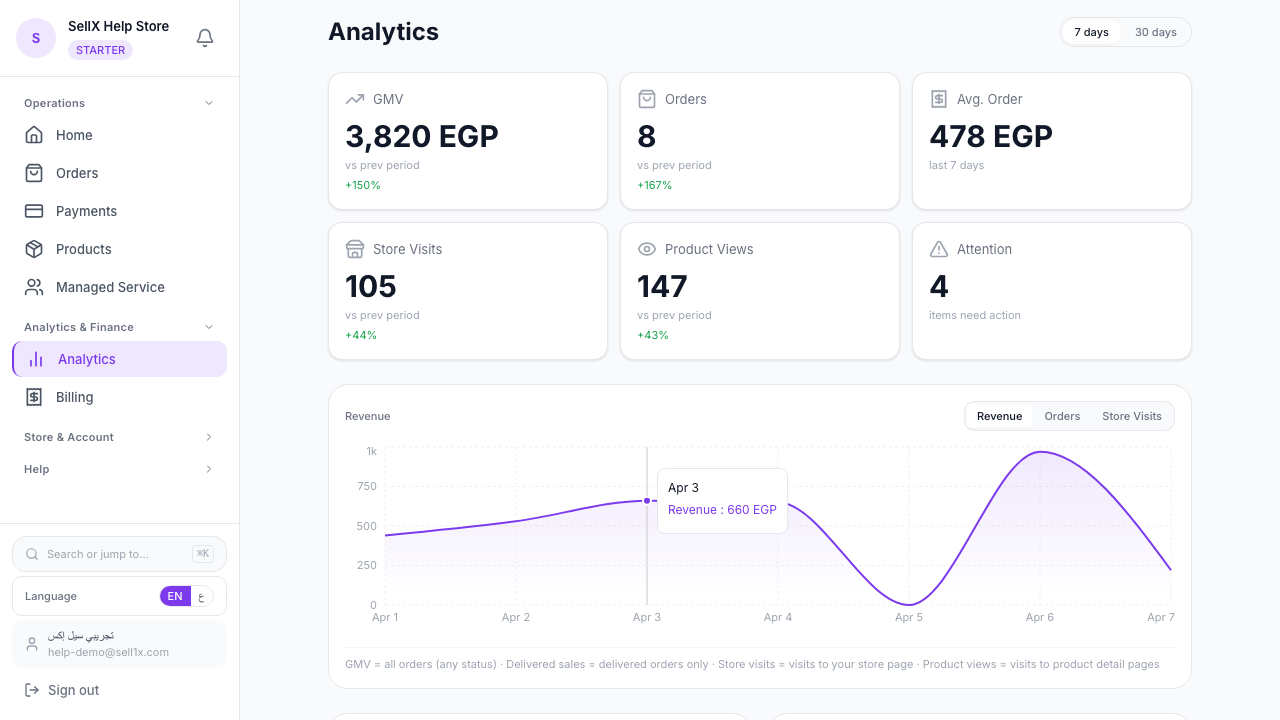
From the analytics page in sellX, you can see: - Total sales - Number of orders - Average order value
Calculate monthly: Overall profit margin = (Revenue - Costs) ÷ Revenue × 100
If it's below 30%, there's a problem with your pricing or costs.
Transparency in Pricing
Customers appreciate honesty. If your price is higher than a competitor, explain why: - "100% natural ingredients — not cheaper but safer" - "Handmade — each piece takes time"
This explanation transforms a high price from "expensive" to "worth it."
The Bottom Line
Right pricing = business sustainability. Not just more profit — it's protection for your time and effort.
One action now: calculate the true cost of your best-selling product and see what your real margin is. The result will surprise you.